How Modern Veterinary Websites Turn Online Visitors into Loyal Pet Owners
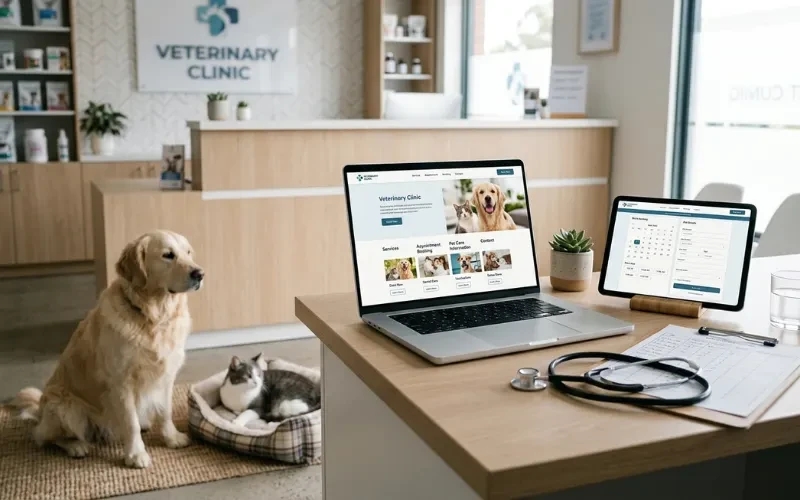
In today’s digital world, most pet owners begin their search for veterinary care online. Whether they need routine vaccinations, emergency care, or specialized treatment, the first step often starts with a Google search. If your veterinary clinic’s website is outdated, slow, or difficult to navigate, potential clients may choose another clinic before even contacting you.
A modern veterinary website is no longer just an online brochure, it is a powerful business tool that helps veterinary hospitals attract new clients, educate pet owners, and streamline communication.
Why Veterinary Websites Matter More Than Ever
Pet owners rely heavily on online research before choosing a veterinarian. They look for reviews, services, pricing transparency, and convenience features such as online appointment booking.
If your website provides a smooth and informative experience, pet owners are far more likely to trust your clinic and schedule a visit.3
A well-designed veterinary website helps your practice:
- Build credibility with pet owners
- Showcase services and expertise
- Improve search engine visibility
- Increase appointment bookings
- Strengthen long-term client relationships
Platforms like MyVetHub help veterinary practices build customized websites that integrate appointment scheduling, communication tools, and marketing features into a single system.
Key Elements of a High-Performing Veterinary Website
1. Mobile-Friendly Design
More than half of pet owners search for veterinary services using smartphones. A mobile-friendly website ensures your content loads properly on every device, providing a seamless experience for visitors.
If users have difficulty navigating your site on their phones, they may leave within seconds.
2. Clear Service Pages
Your website should clearly describe the services your clinic offers. Examples include:
- Wellness exams
- Vaccinations
- Surgery
- Dental care
- Emergency services
When pet owners easily understand what your clinic offers, they feel more confident booking an appointment.
3. Online Appointment Scheduling
Convenience is one of the biggest factors influencing pet owners’ decisions.
When clients can schedule appointments online without calling the clinic, your practice becomes more accessible and efficient.
Integrated platforms allow clinics to manage bookings, reminders, and confirmations automatically.
4. Educational Pet Care Content
Pet owners appreciate valuable information that helps them care for their pets.
Adding blog articles, health guides, and preventive care tips can position your clinic as a trusted authority in pet health.
This content also improves search engine rankings, helping your website appear when pet owners search for related topics.
The Role of Digital Marketing in Veterinary Growth
A great website works best when combined with a strong marketing strategy.
Veterinary digital marketing includes:
- Search engine optimization (SEO)
- Social media engagement
- email newsletters
- online reviews and reputation management
These strategies help veterinary clinics reach pet owners actively searching for care. Digital marketing solutions can increase online visibility and attract new clients while maintaining relationships with existing ones.
Improving Client Communication
Communication plays a critical role in client satisfaction.
Modern veterinary platforms offer tools that allow clinics to communicate with pet owners through:
- automated reminders
- messaging systems
- online forms
- client portals
These tools reduce missed appointments and help clients stay informed about their pet’s health.
Building Trust Through Transparency
Pet owners want transparency when choosing veterinary services. Your website should clearly present:
- clinic philosophy
- veterinarian profiles
- clinic photos
- patient success stories
When visitors feel they understand your clinic’s values and expertise, they are more likely to become loyal clients.
The Future of Veterinary Websites
Technology continues to transform veterinary care.
Features such as telemedicine consultations, online health records, and automated reminders are becoming essential tools for modern clinics.
Veterinary practices that embrace these innovations can deliver better care while improving operational efficiency.
Conclusion
Your veterinary website is often the first impression pet owners have of your clinic. A modern, well-designed website can attract new clients, improve communication, and strengthen your clinic’s reputation.
With platforms like MyVetHub, veterinary practices can combine website design, marketing tools, and client engagement features to create a digital presence that supports both pet care and business growth.
A strong online presence ensures your clinic remains competitive while continuing to provide exceptional care for pets and their families.